Moldova Advances on Its European Path by Fulfilling EU Accession Commitments in the Energy and Trans-European Networks Chapters

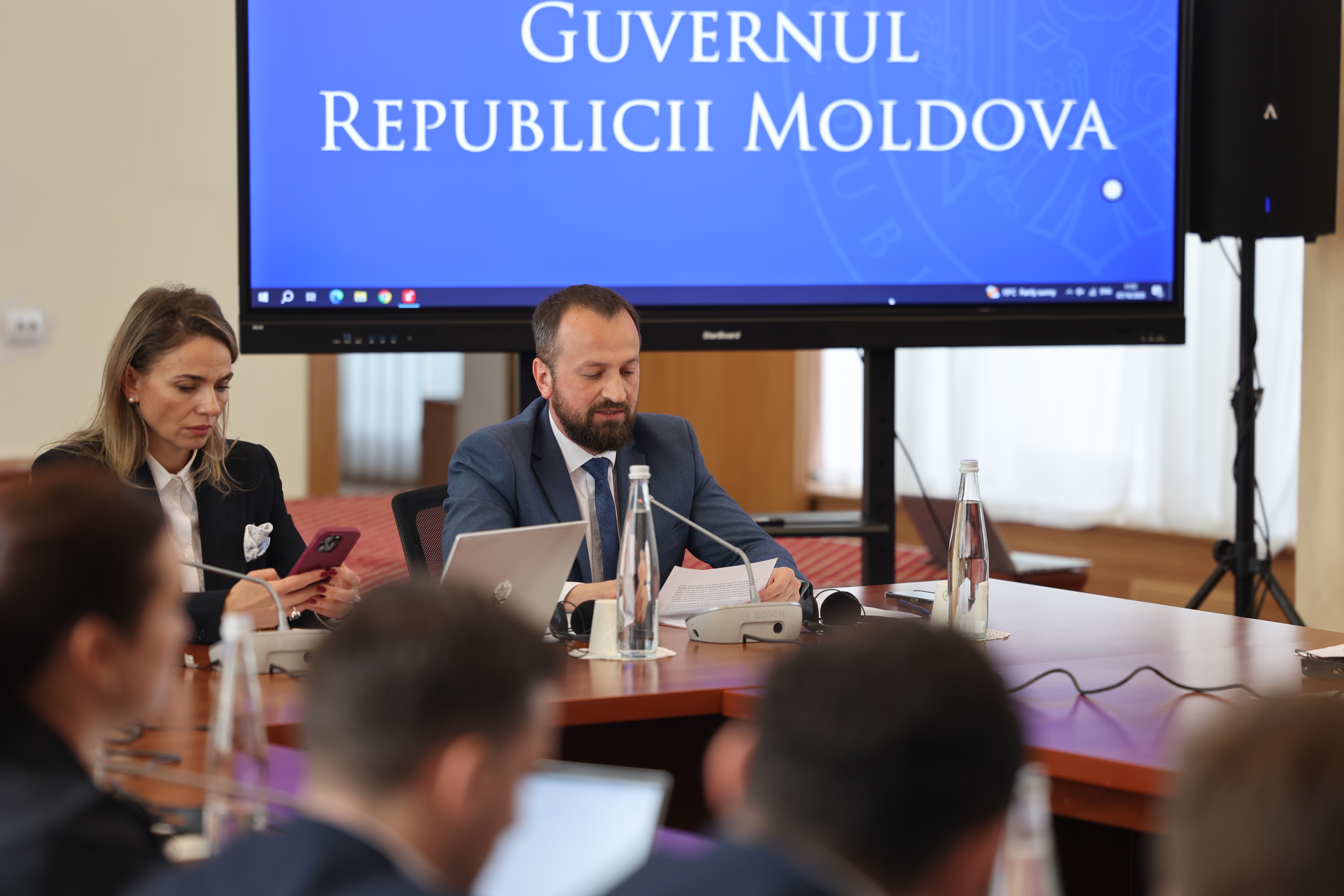
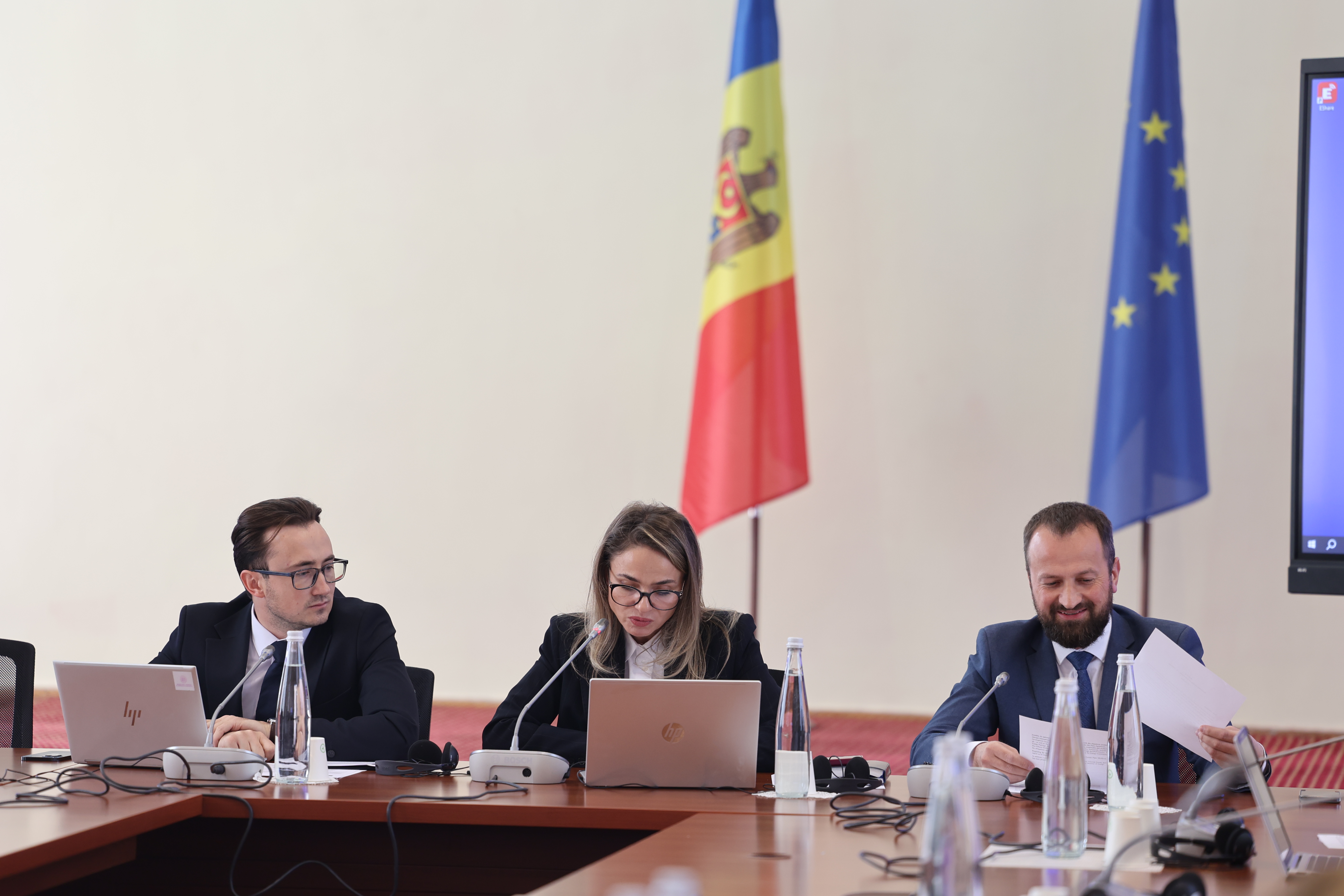
The Republic of Moldova has completed 88 of the 130 actions related to the transposition and implementation of commitments under Chapter 15 – Energy, representing approximately 68% of the total. The figures were presented by Ministry of Energy Secretary General Andrei Grițco and Deputy Secretary General Ion Andronic during a meeting to monitor the benchmarks for closing Chapter 15 – Energy. Andronic also presented progress under Chapter 21 – Trans-European Networks (TEN-E).
Grițco noted that several outstanding actions are at an advanced stage of drafting and are expected to be submitted to the Government, while others are undergoing approval procedures in the Government or Parliament. Ongoing actions include strengthening administrative capacity to implement the new electricity legislation and developing reporting capacity in energy and climate policy.
Regarding the electricity sector, Ion Andronic highlighted the transposition of the Electricity Integration Package through the adoption of Law No. 164/2025 on Electricity and the relevant network codes. The European Commission is currently verifying the extent to which these measures transpose EU requirements. Confirmation is a preliminary step towards coupling Moldova’s electricity market with corresponding markets in the European Union.
The Day-Ahead Market and Intraday Market have been operational since December 2025. Between July and September 2026, daily trading volumes on the Day-Ahead Market ranged from approximately 8% to 40% of daily electricity consumption, indicating increased market liquidity.
Moldova is also continuing to align its national framework on wholesale energy market integrity and transparency with European REMIT requirements. A draft new Law on Wholesale Energy Market Integrity and Transparency is nearing completion. It will bring together the rules applicable to the electricity and natural gas sectors in a single framework, in line with Regulation (EU) 2024/1106 (REMIT 2.0).
“The operation of organized markets is an important step towards developing a transparent and competitive market and moving closer to European market mechanisms, including through the development, as soon as possible, of the organized electricity bilateral contracts market (POCB),” Ion Andronic said.
Several financing programmes are also underway under the Energy Efficiency and Renewable Energy Fund (FEERM).
The National Centre for Sustainable Energy has signed 157 contracts with rural households experiencing extreme energy vulnerability. Renovation works have been completed in 41 homes and are ongoing in another 19.
Under the “Green Home” programme, 208 contracts were signed in the first phase, of which 117 projects have been completed. A further 174 contracts have been signed in the second phase.
Andrei Grițco noted that in September the Government approved new energy labelling rules, including for tumble dryers and commercial refrigeration appliances, as well as rules on biofuel verification. On 24 September, Parliament adopted at first reading a bill transposing Articles 15–17 of Directive (EU) 2023/2413 on the promotion of energy from renewable sources (RED III).
Regarding the security of petroleum product supplies, Law No. 119 of 26 June 2026, transposing Directive 2009/119/EC, has been adopted. It establishes a framework for securing supplies through an effective, transparent, non-discriminatory and competitive system for creating and maintaining oil stocks.
“The next steps include designating the central stockholding entity, preparing the action plan for emergency stocks, scheduled for February–March 2027, and taking inventory of the existing storage infrastructure,” Andrei Grițco said.
Under Chapter 21 – Trans-European Networks, Ion Andronic presented progress following the adoption of Law No. 164/2026, which aligns national legislation with EU Regulation 2022/869 on guidelines for trans-European energy infrastructure (TEN-E) and establishes the framework for cross-border energy infrastructure.
To implement the transposed provisions and provide a practical tool for coordination between project developers and competent authorities, the Ministry of Energy has drafted a Guide on the Authorization of Projects of Common Interest and Projects of Mutual Interest.
The guide is expected to be adopted in October 2026. Training for staff from the relevant institutions is planned for 2027, with support from the Energy Community Secretariat and the TAIEX programme.
“We have the legislative framework for cross-border energy infrastructure projects. It is important that this is followed by preparing institutions to apply the new rules,” Ion Andronic said.
The Ministry of Energy will continue working on the commitments under both chapters, including actions that remain under approval or implementation, as Moldova advances towards meeting the requirements for European Union accession.
 [1]
 [2]
 [3]
 [4]
 [5]