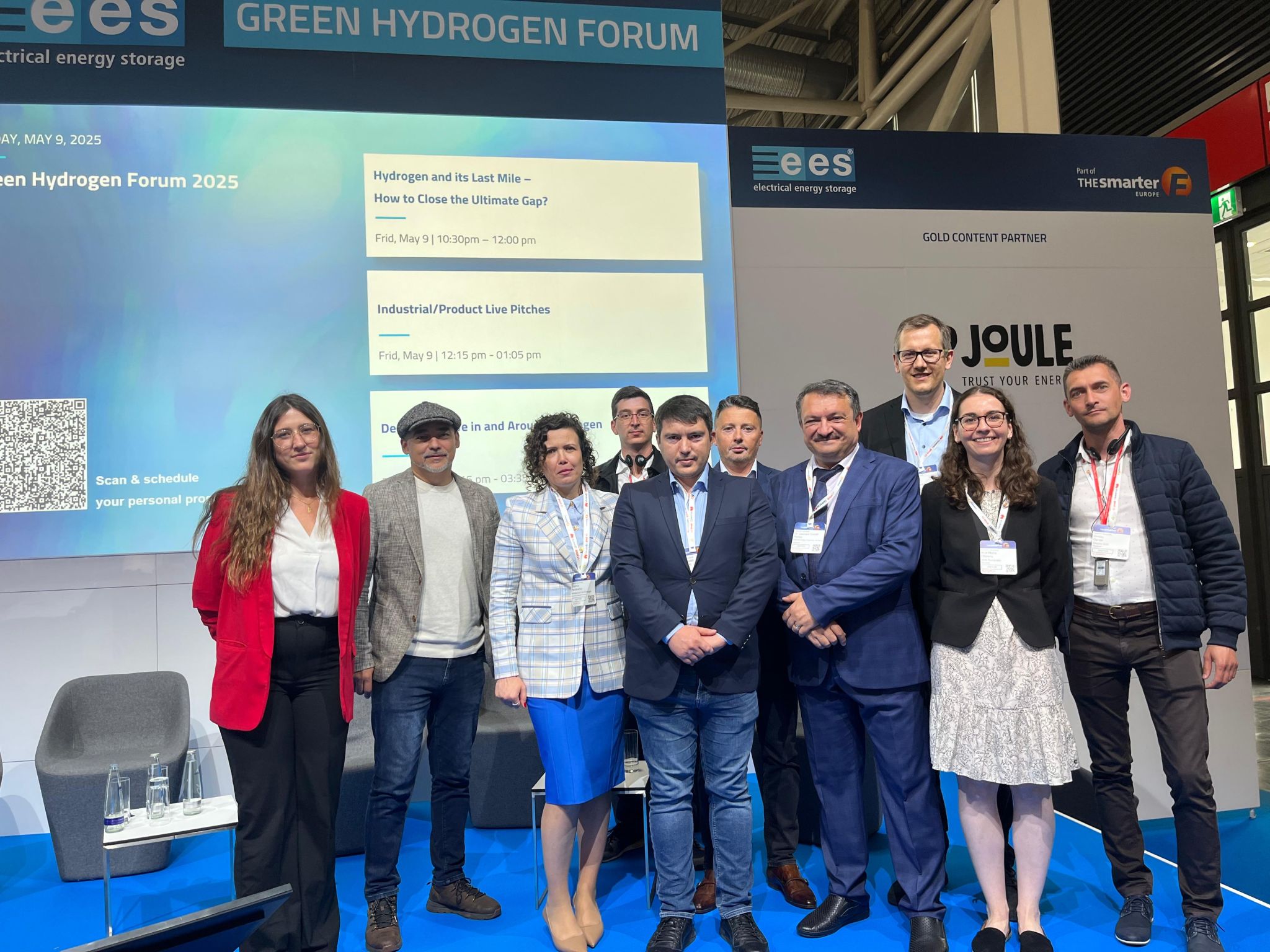
May 13, 2025, Munich – Cristina Pereteatcu, State Secretary at the Ministry of Energy, participated last week in The Smarter E Europe forum held in Munich, Germany. The event brought together government leaders, investors, and innovators in the energy sector to discuss the green transition and future solutions, with a particular focus on the use of green hydrogen in industry and transport.
During a panel dedicated to opportunities and new technologies for hydrogen use, Cristina Pereteatcu emphasized the Republic of Moldova’s commitment to European goals and the strategic importance of adopting new technologies, including green hydrogen, for the country. She also highlighted the major transformations taking place in the national energy sector and reiterated that the energy transition is not a long-term goal, but an immediate priority tied to national security, economic resilience, and European integration.
“In the past three years, the Republic of Moldova has taken decisive steps to reduce its energy dependence on a single supplier, liberalize the electricity and gas markets, and accelerate the implementation of renewable energy,” said Cristina Pereteatcu, also thanking international partners for their support.
In this context, the State Secretary spoke about the development of the new Energy Strategy 2050, which will replace the current 2030 framework and align Moldova with the European Green Deal and the REPowerEU plan.
“This new vision prioritizes diversification, digitalization, and decarbonization—three pillars that can combine to support a very promising field: green hydrogen,” Pereteatcu emphasized.
She also presented key arguments for why hydrogen is relevant for Moldova, including reducing dependence on imported fossil fuels (especially Russian gas), supporting renewable energy integration in the south of the country, and offering long-term solutions for decarbonizing transport and industry.
Cristina Pereteatcu noted that Moldova is continuing its efforts to create a favorable legal framework, including aligning with the European gas decarbonization package and implementing the Regulatory Sandbox Law, which allows for flexible pilot testing of innovative technologies.
“We believe Moldova could develop a Hydrogen Roadmap—not a 100-page strategy, but a practical action plan defining infrastructure priorities, pilot projects, cross-border coordination, and integration of hydrogen into national development plans,” concluded Cristina Pereteatcu.
The State Secretary made a call to European and international partners for continued collaboration in identifying hydrogen-based solutions that would enable Moldova to contribute to Europe’s energy future.
In parallel with the forum, Cristina Pereteatcu also took part in an information visit focused on the production and use of green hydrogen in industry and transport, exploring best practice models applicable in the Moldovan context.
The visit was organized by the Romanian-German Chamber of Commerce (AHK Romania) and included several key stops related to energy innovation.
The program began with a visit to the Zentrum für Sonnenenergie- und Wasserstoff-Forschung Baden-Württemberg (ZSW) in Ulm, where local authorities have invested over €32 million to support clean energy research, with a focus on green hydrogen. Later, she visited the BMW Museum, which showcases vehicles powered by hydrogen, demonstrating the real-world applications of the technology in future mobility.
Another key stop was at Questone, a company specializing in high-performance electrolyzers. These devices convert water into hydrogen with high efficiency, high power density, and low operating costs, offering practical solutions for industrial hydrogen use.
Cristina Pereteatcu also attended the world’s largest exhibition dedicated to innovative energy solutions, where she had the opportunity to interact directly with developers of advanced technologies and international investors.