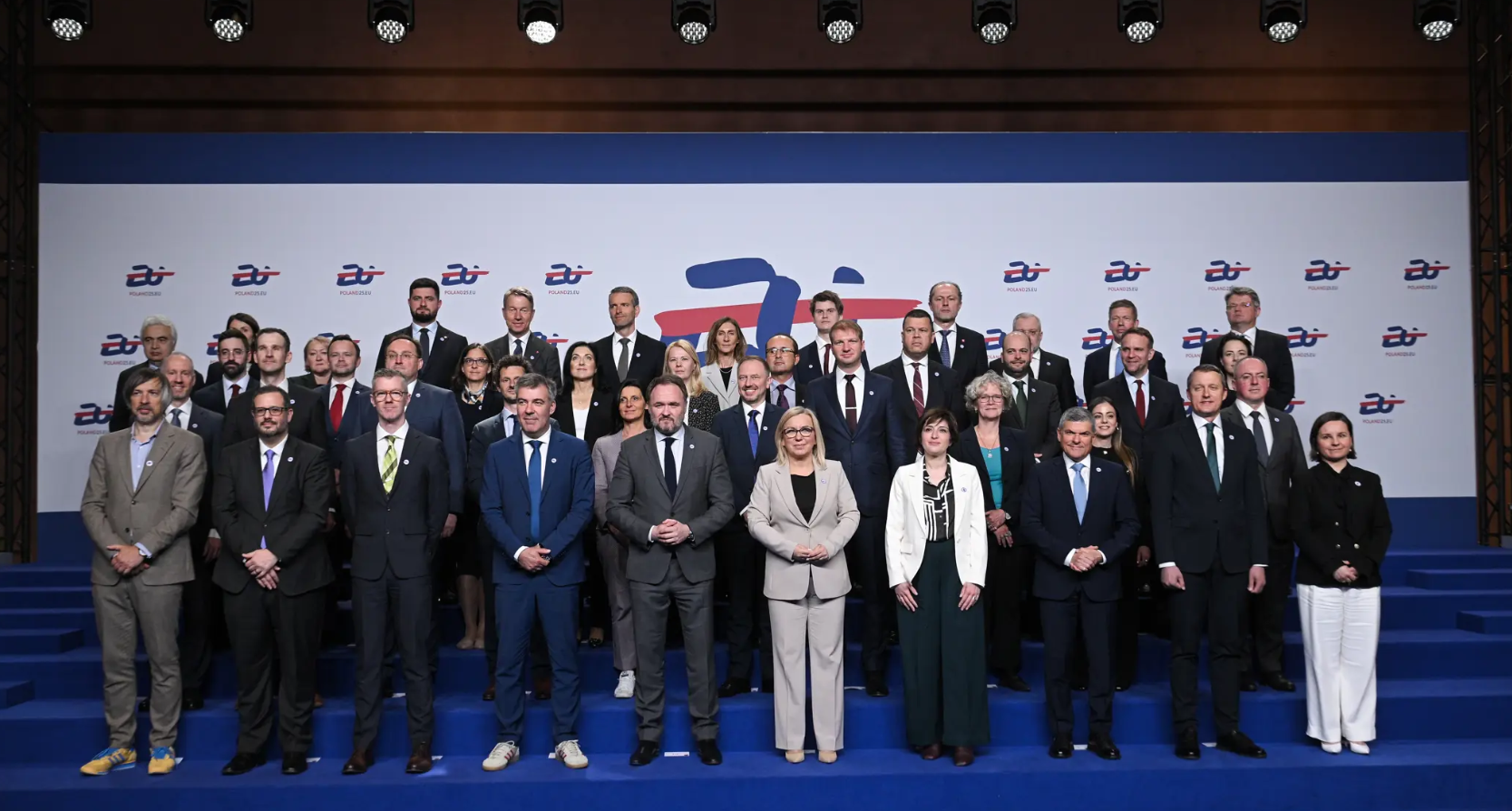
Minister of Energy of the Republic of Moldova, Dorin Junghietu, Participates in the Informal Transport, Telecommunications and Energy Council (TTE) Chaired by the Polish Presidency of the EU Council
- 605 reads

Warsaw, May 14, 2025 – The Minister of Energy of the Republic of Moldova, Dorin Junghietu, took part in the Informal Council on Transport, Telecommunications and Energy (TTE), chaired by the Polish Presidency of the Council of the European Union. The event marked the launch of the Baltic Resilience Initiative (BRI) – a regional cooperation platform aimed at strengthening the energy resilience of countries surrounding the Baltic and Black Seas in the face of current geopolitical challenges.
The session brought together political decision-makers, government leaders, and representatives of European institutions to define concrete actions for regional cooperation in the energy sector. In his speech, Minister Dorin Junghietu highlighted Moldova’s experience in overcoming recent energy crises and reducing dependency on the Transnistrian region.
“For the Republic of Moldova, energy security is a matter of sovereignty. Through consistent efforts and European support, we have taken concrete steps toward integration into the European energy market. The Baltic Resilience Initiative will serve as a catalyst for these processes and a platform for solidarity in facing common risks,” said Minister Junghietu.
During the event, Poland’s Minister of Climate and Environment, Paulina Hennig-Kloska, emphasized the importance of investing in next-generation energy technologies for Europe’s industry:
“Investments in new energy technologies are a driver of growth for European industry and an investment in security. Clean, next-generation technologies will reduce our dependence on fossil fuel imports – meaning billions of euros will no longer leave Europe every year. That is why the EU will support their development. It will benefit our economy, our people, and the environment.”
In a dedicated discussion panel, Minister Junghietu provided an update on Moldova’s energy sector, noting that up until January of this year, between 60% and 80% of the country’s electricity consumption was covered by the MGRES power plant located in the Transnistrian region. As of January 1, 2025, this supply has been replaced by electricity imports from Romania, via the European market.
The Minister also drew attention to Moldova’s outdated energy infrastructure, stating that over 90% of the country’s high-voltage lines are more than 30 years old. He reiterated the urgent need to complete the Vulcănești–Chișinău Power Line (dubbed the “Energy Independence Line”) on time and to begin construction of the new Bălți–Suceava Line, which will enhance bilateral energy security with Romania.
Regarding internal generation capacity, Moldova currently has 650 MW installed from renewable sources, as well as two cogeneration units that generate less electricity during the summer months. In the warmer season, increased demand for air conditioning places strain on the grid, exposing the country to the risk of controlled blackouts.
“For this summer, we are requesting support from our European partners to secure at least 600 MW of import capacity so we can manage peak consumption. Additionally, we need investments in small-capacity mobile gas turbines to cover peak hours and relieve pressure on the centralized system,” the Minister added.
Minister Junghietu also spoke about Moldova’s winter preparedness measures, including a plan to build strategic natural gas reserves (50 million cubic meters – the equivalent of 10 days’ consumption), and mandatory commercial storage reserves for suppliers. These reserves are already stored in Romania and Ukraine.
The event also highlighted the need for close collaboration with Ukraine, especially concerning interconnection and cross-border generation capacities. The Moldovan minister reaffirmed full solidarity with Ukraine and emphasized the importance of repairing Ukrainian production units before the cold season.
In conclusion, Moldova’s participation in this session represents another step toward European energy integration and a clear sign of the Moldovan Government’s commitment to strengthening regional resilience in the face of geopolitical and climate-related challenges.
Images