What is actually happening with gas in Moldova? (Article)
15-07-2025 15:49
554
- 554 reads


The natural gas sector is divided into three main activities - supply, transmission and distribution, and in countries with gas reserves, production.
The supply of natural gas involves purchasing it, paying for transportation services to a specialized company that owns the main gas pipelines, capacity reservation services, distribution services through low-pressure networks, and issuing invoices to end consumers, along with providing customer support services.
Previously, these three activities were concentrated in Moldovagaz, which held a monopoly on the natural gas market and prevented other suppliers from accessing the network for many years. Similarly, Moldovagaz was the only company that had the right to supply gas to the Transnistrian region, according to a provision in the natural gas law, because it was the only one that had a contract with Gazprom and Tiraspoltransgaz. For this reason, the separation of the three types of activities, known as unbundling, a commitment made by the Republic of Moldova in 2010, has been postponed several times until October 2026, when the current contract between Moldovagaz and Gazprom expires, thus trying to maintain supplies and avoid an economic and humanitarian collapse on the left bank of the Dniester.
What is unbundling and why is it happening now?
After Gazprom stopped supplies to the Transnistrian region at the beginning of 2025, postponing unbundling no longer makes sense, because the gas reaches the Transnistrian region through other mechanisms. Since February 2025, a company from the United Arab Emirates has been paying a company from the Hungarian MET group, registered in Switzerland, which purchases gas and delivers it to the Transnistrian region. However, the scheme is non-transparent and unsustainable. Thus, the deadline for Moldovagaz to separate its supply, transmission and distribution activities was revised by ANRE at the proposal of the Ministry of Energy and brought forward to July 31, 2025. If this does not happen, Moldovagaz will lose its license, and the supply activity will pass to Energocom, which took over the public service obligation in this regard, following a competition organized by ANRE.
The unbundling, however, was partially achieved, when in September 2023, Vestmoldtransgaz, a company that operates the Iași-Chișinău gas pipeline and is owned by the operator of the Romanian gas transmission system – Transgaz – and the European Bank for Reconstruction and Development (EBRD), took over the gas transmission activity from Moldovatransgaz. The takeover was carried out through a transmission network lease agreement.
From August 1, Moldovagaz would remain only responsible for natural gas distribution, i.e. its delivery from the connection points of the high-pressure transport networks to the final consumers.
Thus, an intermediary in the gas supply process will be eliminated – Moldovagaz – which, after the cessation of deliveries from Gazprom and the Russian invasion of Ukraine, as a legal entity affiliated with Gazprom, can no longer purchase gas on international markets. In other words, until now, Moldovagaz's work of purchasing gas on the wholesale market was done by Energocom, but the profits remained with the company owned by Gazprom.
Russian gas through intermediaries even more expensive?
Several pro-Russian parties are circulating the idea that Energocom would buy the same Russian gas, but through intermediaries, at exaggerated prices, put on the shoulders of consumers, and the profits would be hidden offshore.
First, tariffs have increased because Russia has repeatedly used energy as a weapon, trying to blackmail European countries. Thus, in 2021, international gas prices reached record levels of even $3,000 per thousand cubic meters. At the same time, the only gas supplier to the Republic of Moldova, Gazprom, with which the Republic of Moldova has a supply contract signed until October 2026, unilaterally reduced deliveries to a level that only covered the consumption of the Transnistrian region. Then, Energocom, with the support of experts provided by the European Union, began to buy gas on exchanges and from international traders, including to build up stocks for the winter. On exchanges, the price is public and is set transparently, unlike contracts with Gazprom, which have always been based on a formula imposed by Russia and have never been negotiated in the direct sense of the word.
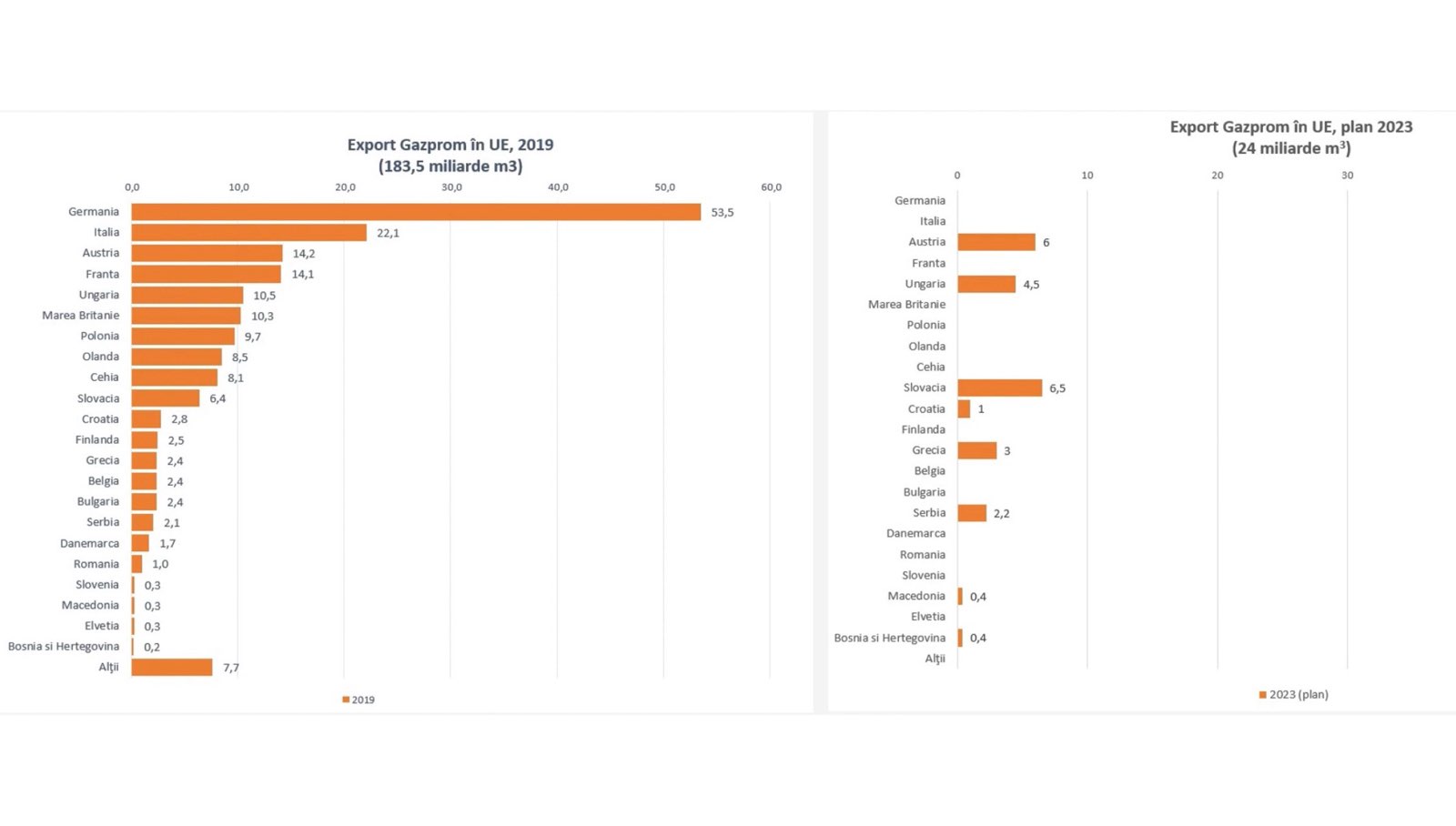
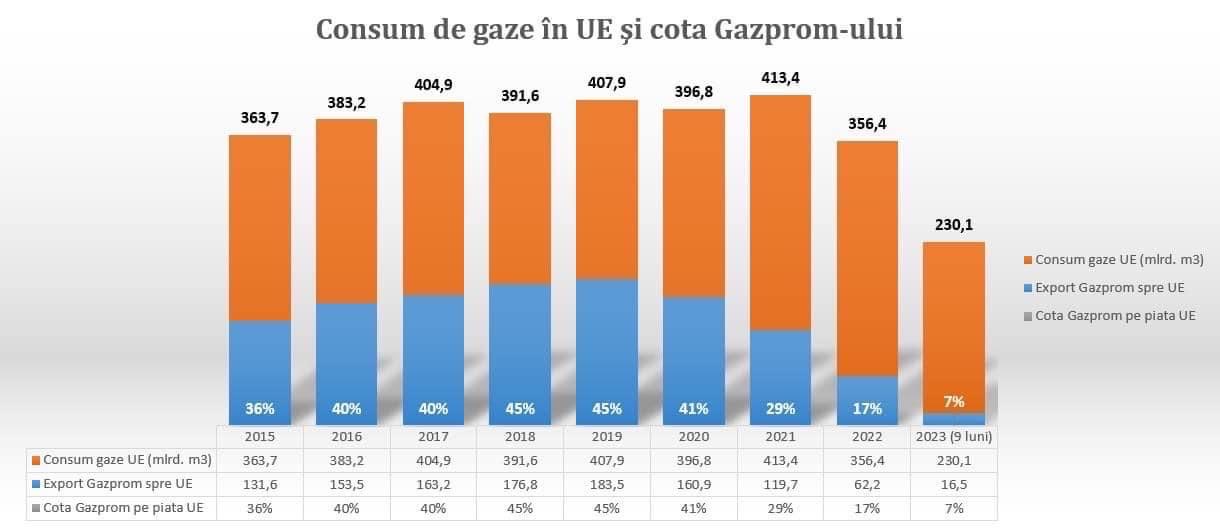
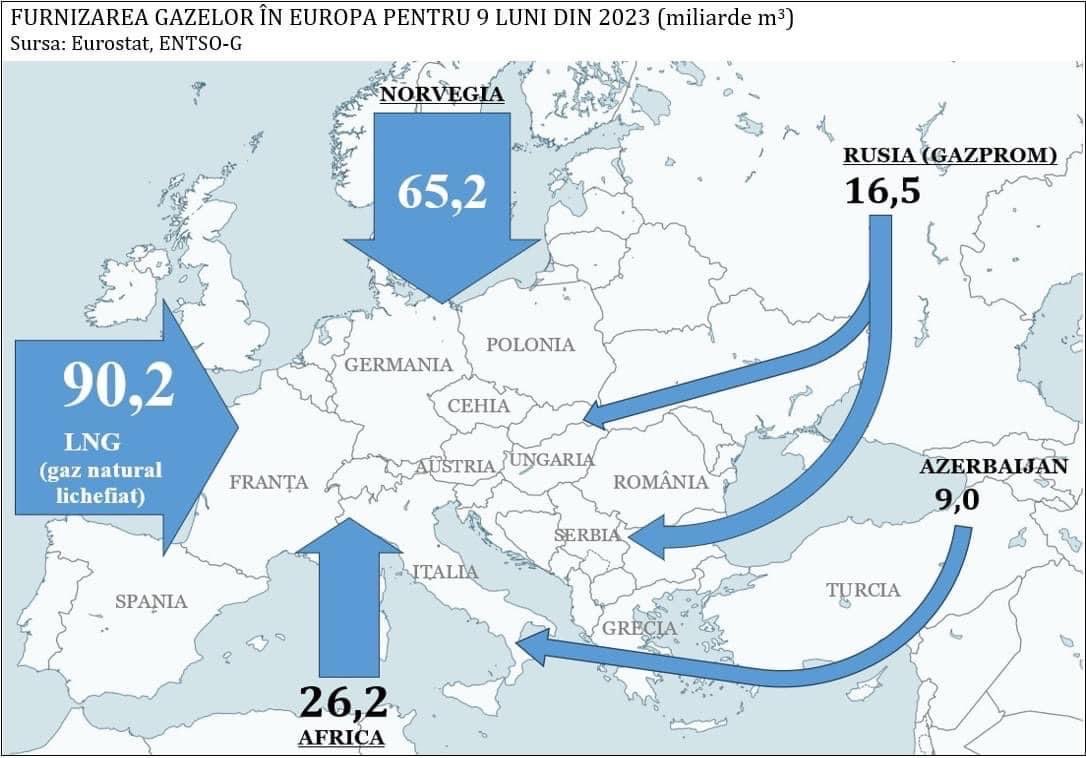
Secondly, as a result of Gazprom's aggressive and unpredictable policy, European countries have stopped buying Russian gas, and Gazprom's share in the EU has dropped from 45% in 2019 to just 7% in 2023. This means that there is simply not enough Russian gas that can reach Moldova from European countries, and these figures contradict the manipulations of pro-Russian parties in Moldova.
Where and how much do we buy gas from?
Energocom buys gas on the free market using both its own resources and those from a loan taken from the European Bank for Reconstruction and Development, which in turn has strict rules regarding the qualification of supplying companies.
If previously, Energocom made purchases and sales to Moldovagaz “in a mirror”, that is, it only purchased when it had an order from the Gazprom subsidiary, now, after it is clear that it will take over the supply of gas without the mediation of Moldovagaz, the company has established a very clear strategy for the supply of gas to the Republic of Moldova and to date, it has already purchased 350 million cubic meters of gas, almost half of what is needed for the next cold season.
This strategy, approved by the company's board, ensures purchases at the best prices on the market and guarantees uninterrupted gas supplies. Eugeniu Buzatu, the company's director, says that prices and suppliers, as well as other aspects relevant to the purchases, will be announced after the deliveries are completed, because this is what the contractual clauses provide, but also so as not to influence the prices in the offers. "If we were to announce the purchase prices or the ceiling price, what do you think the offers received during the auctions will be? Exactly the price set by the council and higher than the offers received competitively. So, as long as the purchases are underway, as long as the entire required quantity of gas is not yet procured, Energocom will maintain discretion over the prices, contractual partners and individual contracted volumes, but I assure you that they will be announced transparently at the right time." In 2024, SA Energocom purchased over 830 million cubic meters with a weighted average price of about 444 US dollars/ 1000 cubic meters. Natural gas was purchased from eight companies in the EU, plus the Romanian Commodity Exchange (BRM). Over 2⁄3 of the volumes came from entities in Romania: OMV Petrom, Romgaz, Engie Energy Romania and BRM.
The purchased gas is with firm delivery in the respective month of consumption and is purchased both at a fixed price and at a price indexed to the quotations of the main exchanges in central and south-eastern Europe such as the TTF (Title Transfer Facility) in the Netherlands and the BRM (Romanian Commodity Exchange) in Romania. This is the case all over the world, perhaps with the exception of Belarus. Even the contracts between Moldovagaz and Gazprom were linked to the TTF exchange, and previously, for about 20 years, to the Platts oil index.
Why is gas not purchased directly from the Dutch exchange? Because the transportation tariffs through all transit countries (9 transport operators) will make the price uncompetitive, that is, higher than if it is bought on the Romanian stock exchange and transported directly to Moldova.
With what money do we buy natural gas?
Several criticisms have been made regarding the state-guaranteed loan that Energocom took from the European Bank for Reconstruction and Development, that servicing the loan would mean stealing tens of millions of euros from consumers. In fact, the mechanism is quite simple to understand. Previously, Moldovagaz paid monthly for the gas delivered by Gazprom. That is, it collects the money from consumers and transfers it to the supplier. Now, because stocks are made for the entire year, with advance payments, huge amounts are needed that will be immobilized for months. In fact, Moldovagaz also paid only $50 million for stored gas from its own resources in 2024, with the rest of the purchases being made from the money collected from consumers, over a month after delivery.
So far, Energocom has demonstrated that it can learn very quickly and manage very sophisticated activities. Let's just remember that in 2022 in Moldova no one knew how to purchase gas or electricity from the stock exchanges. Everything was purchased from Gazprom and MGRES. In a very short time, Energocom managed to obtain licenses in a number of countries, such as Romania, Bulgaria, etc. It was the first company to commercially use the interconnector on the gas pipeline between Greece and Bulgaria, when it was put into operation, it was the first to use the trans-Balkan gas pipeline in reverse mode, and it imported liquefied natural gas from the United States on the very first ship that docked at the LNG terminal in Alexandropoulis, Greece.
In addition to these developments, recent amendments to the Natural Gas Law provide that the supplier with public service obligation designated by ANRE, which will be taken over by Energocom, is obliged to adopt, each year, no later than March 31, the Natural Gas Procurement Strategy.
In another context, by October 1, 2025, ANRE will approve a calendar for gradual market liberalization, so that large consumers will enter the free market no later than the end of the next heating season - from April 1, 2026, and all consumers will have access to a price comparator, an online tool through which each consumer will be able to compare gas supplier offers and decide to change supplier.
In another context, by October 1, 2025, ANRE will approve a calendar for gradual market liberalization, so that large consumers will enter the free market no later than the end of the next heating season - from April 1, 2026, and all consumers will have access to a price comparator, an online tool through which each consumer will be able to compare gas supplier offers and decide to change supplier.
Images